
Quick answer
What this means in practice
Having credit challenges does not mean homeownership is out of reach.
Key takeaways
- Do not select a lender from the score alone.
- Late payments, collections, a consumer proposal, bankruptcy, tax arrears, and mortgage arrears are not treated as one category.
- Obtain reports from both Canadian credit bureaus, check the account details and dates, and dispute factual errors through the bureau process.
- Moving to a lower-cost lender is an objective, not a guaranteed timeline.
There are established paths to mortgage financing - each with different requirements, costs, and timelines.
The key is understanding where you stand today and which path is realistic for your situation.
Ontario's housing market continues to appreciate in most regions, which means waiting until your credit is perfect can cost more in price growth than you save in rate improvement.
Understanding your credit situation
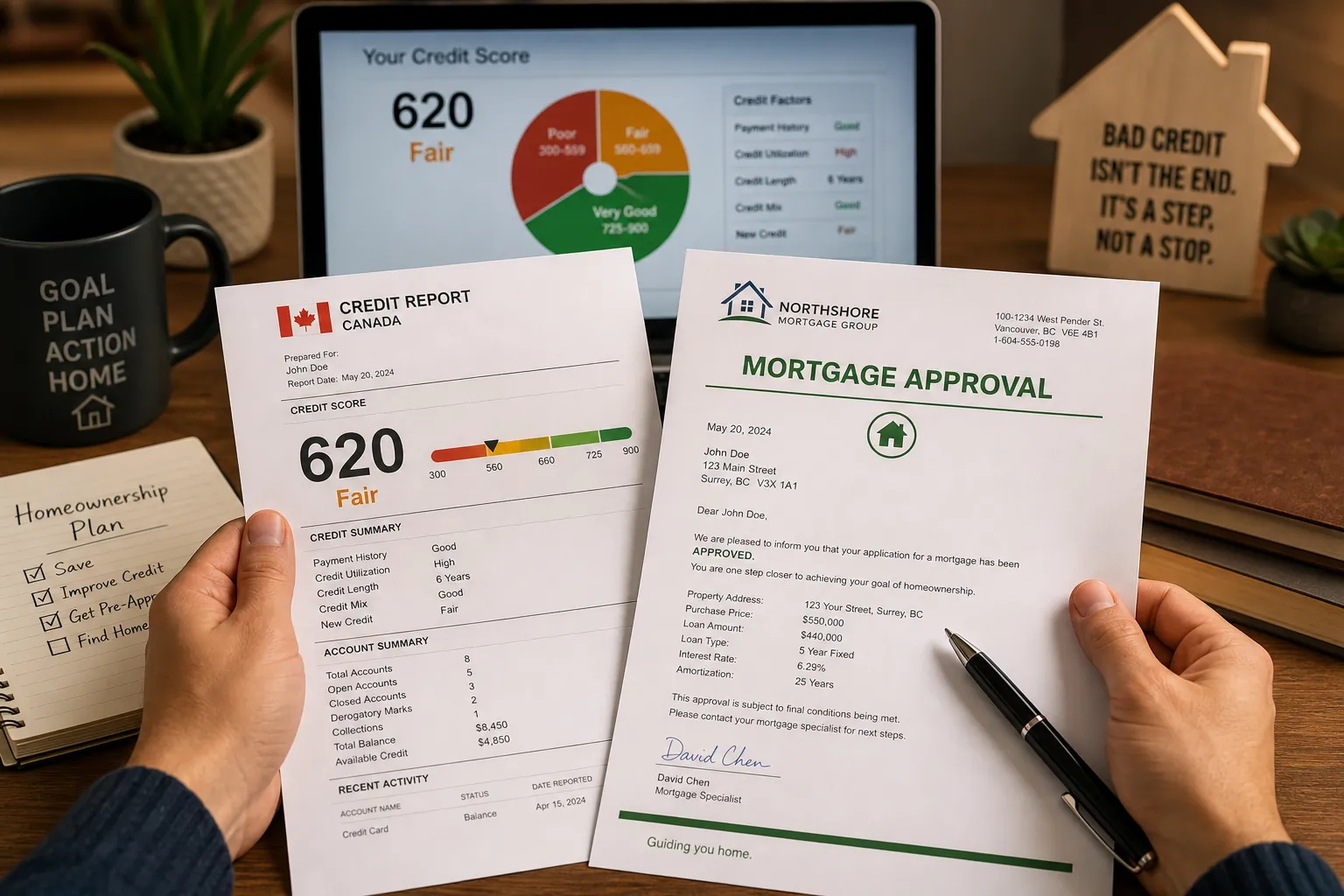
Do not select a lender from the score alone. Review both Canadian credit reports for payment history, utilization, collections, public records, account age, and errors. A score can change as bureau data changes, and lenders can use different bureau versions and internal policies.
The useful diagnosis identifies what caused the weakness, when it happened, whether it is resolved, and what recent evidence shows improved repayment behaviour.
Credit events and how lenders view them
Late payments, collections, a consumer proposal, bankruptcy, tax arrears, and mortgage arrears are not treated as one category. Recency, amount, repayment history, discharge status, explanation, income, equity, and property all matter. There is no reliable universal waiting period or approval promise across lenders.
Obtain the legal discharge or settlement documents, correct reporting errors, and have the file reviewed against current lender policy before making an offer.
How to check and improve your credit score
Obtain reports from both Canadian credit bureaus, check the account details and dates, and dispute factual errors through the bureau process. Improvement depends on what is affecting the file; there is no universal point increase or repair timeline.
Consistent on-time payments, lower revolving balances, limited new credit, resolved collections where appropriate, and accurate reporting can help. Confirm the priority steps from the actual reports before changing or closing accounts.
The path from B-lending to prime
Moving to a lower-cost lender is an objective, not a guaranteed timeline. The exit may require on-time mortgage history, lower revolving balances, filed taxes, stronger documented income, resolved collections, and enough equity for the next transaction.
Set a review date well before maturity and track the specific approval barriers. A private or B-lender mortgage without measurable exit conditions can turn into an expensive renewal.
Strengthening your application before applying
Prepare current income and tax documents, proof of down payment or equity, debt statements, both credit reports, and evidence that any required arrears or collections were resolved. Keep the explanation of past events factual and supported.
Then test the file against current lender policy before making another application. The strongest change is the one that addresses the stated decline reason, not a generic score target.
Build a lender-ready credit explanation
Keep the explanation factual and brief: what happened, when it happened, how the obligation was resolved, and what has changed since. Attach evidence such as discharge documents, settlement letters, a corrected bureau report, or recent statements showing on-time payments. Avoid blaming the bureau or minimizing information the lender can verify.
The strongest explanation connects the past event to recent behaviour and a sustainable budget. It does not promise a particular approval outcome.